Hit a pothole? What you can do about the damage
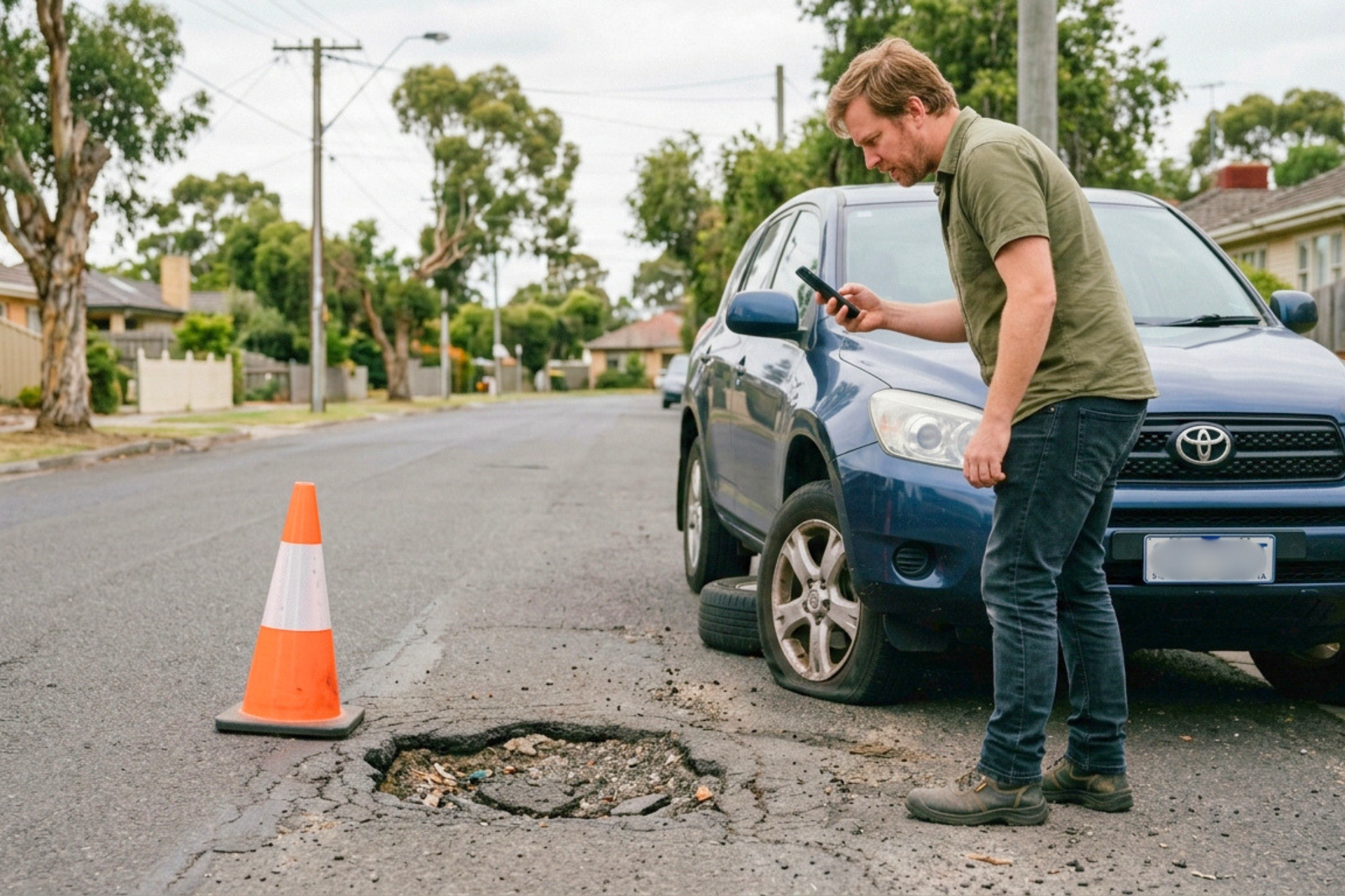
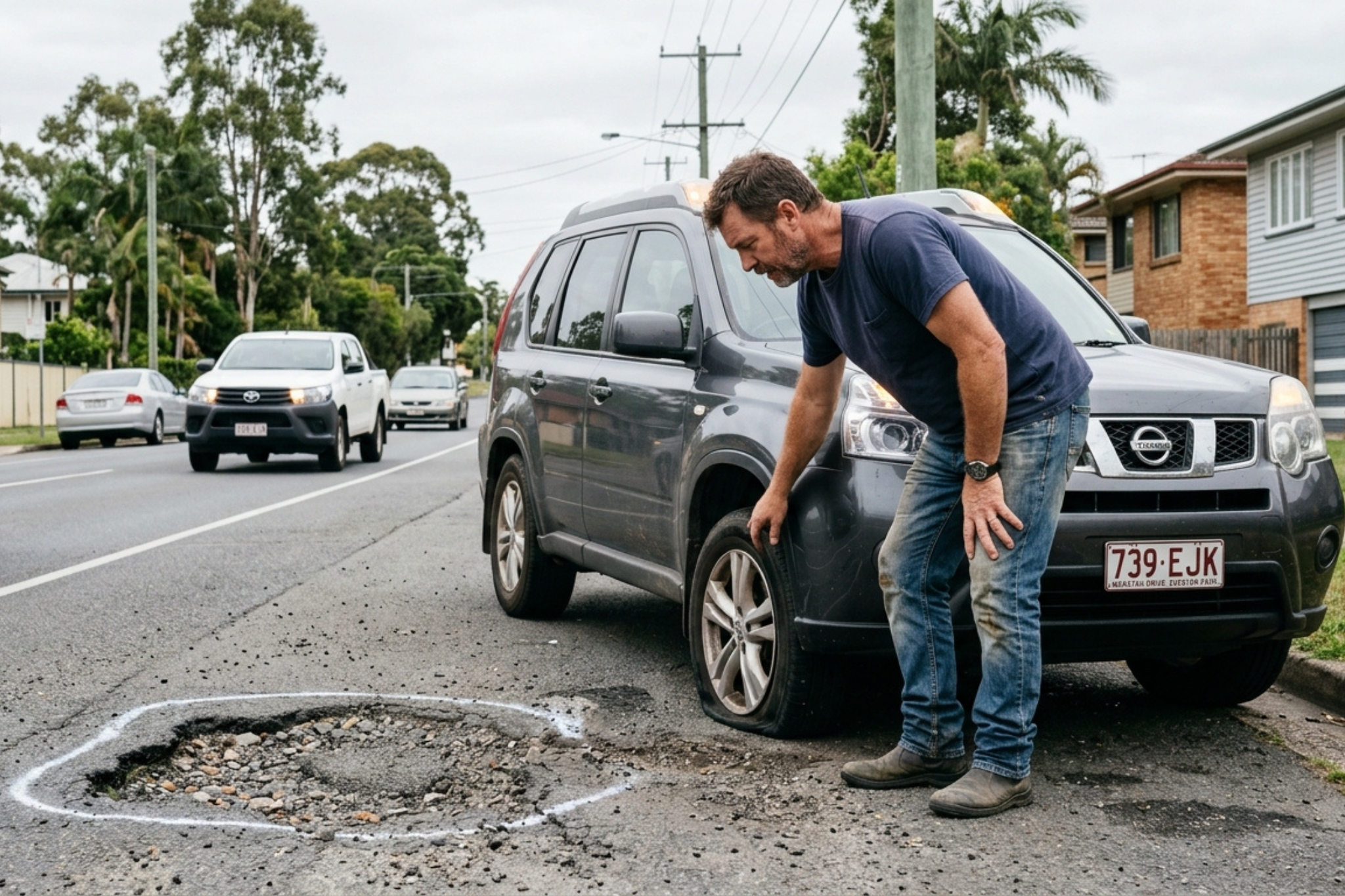
It's natural to try to drive around a pothole when we see one. But thousands of Australian drivers caught unawares have been left with blown tyres, cracked windscreens, bent suspension and nasty repair bills running into the thousands.
The situation is so bad in Victoria, potholes have become a political flashpoint ahead of the November state election. The Labor Government has pledged more than $352 million to fix 500,000 potholes over six months, if re-elected. They propose putting prisoners on “basic” road maintenance so skilled workers can concentrate on the offending potholes. The opposition Victorian Liberals and Nationals have promised $5 billion to repair and rebuild the state’s roads, claiming Labor had allowed them to turn into “goats’ tracks”. The Victorian Greens have slammed Labor’s decision to privatise more of Victoria’s road maintenance network, warning it will leave taxpayers paying more while already crumbling roads get worse.
This comes on the back of several major incidents involving potholes. In August, up to 30 vehicles were damaged when large water-filled potholes on the Princes Freeway at Bunyip caught drivers by surprise. “The potholes are terrible on this road, and they have been for quite some time,” a local resident told ABC News. “Something really needs to be done about it.”
The next day, drivers were forced off the Calder Freeway near Gisborne, after damaging tyres on potholes. “They’re just filling gaps, they’re not actually going to the cause of the problem,” another local resident said.
So who is responsible for fixing potholes? Can you claim the cost of any repairs back? Does it matter if the damage happened on a highway or country road, or in a shopping centre car park? The answer depends on the location of the pothole, who manages that stretch of road (or land) and whether you can prove the damage wasn’t your fault.
Why are potholes becoming such a problem?
Potholes form when water seeps beneath the road surface, usually through cracks made in the bitumen or asphalt in the heat of summer or through wear and tear, and weakens the base layer. Traffic then pounds the weakened patch until it collapses, leaving an often dangerous hole.
Heavy rain also accelerates the process, which is why potholes are more prevalent in wetter months. It’s also why they often reappear in the same spot after being patched.
With almost 900,000 kilometres of road, and 80 percent of that rural or remote, Australia’s network is expensive to maintain. Experts argue that climate change has accelerated the deterioration, with extreme heat, bushfires and floods all contributing factors.
Road crews across the country are losing the battle to repair the backlog before new damage appears. Many authorities are also struggling to foot the bill. When Wingecarribee Shire Council, in NSW’s south west, identified a $100 million deficit in its road maintenance budget, residents were told they would either have to accept a 34.4 percent rate rise over three years to cover the shortfall, or put up with deteriorating roads.
What damage can a pothole cause?
We’ve all felt the jolt of an unexpected pothole but most of us generally escape unscathed. Many Australian drivers aren’t so lucky. A hard hit, or just a hit in the wrong spot, can cause:
-
- Cracked windscreens
- Blown or shredded tyres
- Buckled, bent or cracked tyre rims
- Wheel alignment issues
- Suspension damage
- Steering issues
Not all of this shows up right away, either. Alignment and suspension damage can be hard to spot at first and only become obvious when the car starts pulling to one side, or through uneven tyre wear. It is worth getting a proper mechanical check rather than assuming a tyre change will fix the issue.
Who is responsible for fixing the potholes?
It depends on where you are driving. Local roads are generally maintained by the local council, while major arterial roads, freeways and highways usually sit with the state road authority. If you’re not sure who manages a particular stretch, check with your council or on the relevant state transport website.
Many drivers assume that paying registration and council rates automatically entitles you to compensation for any damage that occurs on a poorly maintained road. But road authorities are generally only liable if you can show negligence, meaning they knew about the specific hazard and failed to fix it within a reasonable time
In Victoria, there is also a $1681 damage threshold before a Notice of Incident and Claim will even be considered. Even when a pothole damage claim is made, statistics show they have a very low success rate – only 1.3 percent of compensation claims for hazards on Victorian roads made in 2023 and 2024 resulted in a settlement.
What about potholes on private land?
Not every bone-jarring bump with a pothole happens on a public road. You can run into one in commercial car parks, such as shopping centres, on private roads or driving into private land.
Rather than falling under road management legislation, these are generally the responsibility of the person or company in control of the land, such as a shopping centre’s landlord rather than a retailer leasing the space.
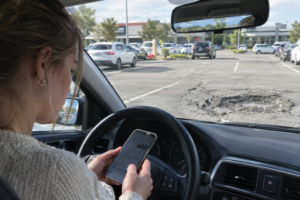
Property owners have a legal duty of care to ensure the space is safe for vehicles and pedestrians. If it can be proved they ignored known hazards, they could be liable for any damages incurred.
As with public roads, you will need to show the operator knew, or reasonably should have known, about the pothole and didn’t fix it in a fair time frame.
What should I do if I hit a pothole?
-
- Put your safety first - Pull over as soon as it is safe and check for injuries to yourself or any passengers before you inspect the car.
- Photograph everything - This means not just the pothole, but the surrounding area, and the damage to your vehicle from different angles.
- Record all details - Note the exact location, date and time, including the weather conditions, such as whether it was dark and raining.
- Report the hazard - Notify the council, road authority or centre management as soon as possible so other accidents can be avoided. You can also use the Snap Send Solve app to report a pothole, which then alerts the correct authority or “solver”.
- Get quotes and keep receipts - Two independent repair quotes will strengthen your claim and invoices could be important if you pursue further action.
- Notify your insurer - Even if you plan to pursue the road authority or landowner, lodging a report promptly with your insurer will help ensure a smoother insurance claim.
- Put your safety first - Pull over as soon as it is safe and check for injuries to yourself or any passengers before you inspect the car.
- Photograph everything - This means not just the pothole, but the surrounding area, and the damage to your vehicle from different angles.
- Record all details - Note the exact location, date and time, including the weather conditions, such as whether it was dark and raining.
- Report the hazard - Notify the council, road authority or centre management as soon as possible so other accidents can be avoided. You can also use the Snap Send Solve app to report a pothole, which then alerts the correct authority or “solver”.
- Get quotes and keep receipts - Two independent repair quotes will strengthen your claim and invoices could be important if you pursue further action.
- Notify your insurer - Even if you plan to pursue the road authority or landowner, lodging a report promptly with your insurer will help ensure a smoother insurance claim.
While it is difficult to get compensation for a run-in with a pothole, it doesn’t have to be a dead end. Once you know who manages the road, you are in a stronger position to determine the best route.
Reporting potholes also helps raise the profile of these hazards and puts pressure on governments and councils to do something about them, sooner rather than later.
Lift the road blocks
Hit a pothole? Not sure what to do next? Make a complaint with us and we will lead you in the right direction.