Going below: Underground data centres lead the way
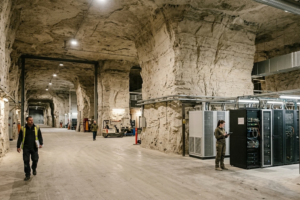
Lefdal spreads over 120,000sqm – roughly the size of eight footy fields – and up six levels, with 75 distinct chambers. Yet this data centre in west Norway is barely a blip on the striking Nordic landscape.
That’s because all that space is taken up 60 metres below ground, extending more than 700 metres inside a mountain, in a former olivine mine. The only signs that anything lies beneath are some fencing and administration staging outside the entrance.
At a time when data centres are increasingly on the nose, Lefdal chief commercial officer Mats Andersson says this one has not generated a single complaint from locals since it opened in 2017.
“A data centre like this would normally, on the outside, be a big gray building with no windows and in the way of neighbourhoods and municipalities, but we’re hidden,” he says.
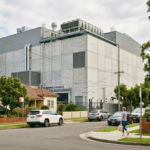
The enormous footprint of these facilities that store racks of computers is one reason for the global backlash against data centres. Others relate to the noise they make, the inordinate amount of water and power they consume, and the pressure they put on the housing market.
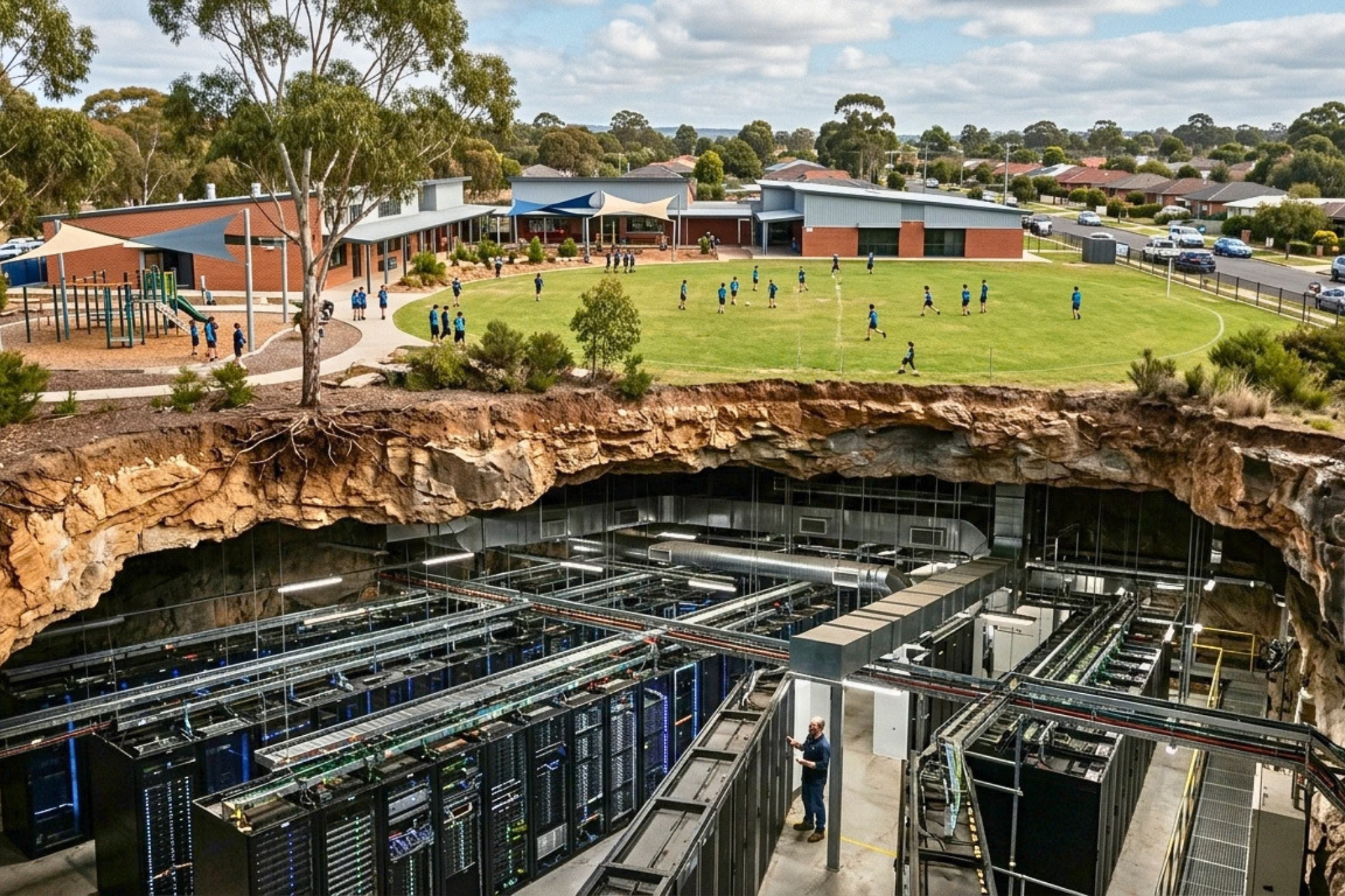
Handle My Complaint CEO Jo Ucukalo, a former civil engineer, maintains all these issues can be addressed by following Norway’s lead and putting data centres in Australia underground.
“Australia is at the front end of a data centre build-out that will shape its industrial landscape for the next half century,” she writes in a detailed submission to the Senate inquiry into artificial intelligence and data centres. “The decisions being made now – where these facilities go, how they are built, and the people living beside them experience – will lock in consequences that cannot be reversed.”
Ms Ucukalo says Australia’s planning framework assumes that data centres are surface industrial buildings. “That assumption is incorrect.”
Rather than anger communities and chew up valuable land better used for homes, schools and other infrastructure that needs to be above ground, she argues Australia should be digging deeper into an asset we already have – disused mines.
Resources worth mining
Data centres are not built for people, but for information. The rows of computers need clean air and a steady temperature, something a surface campus will spend a large amount of power manufacturing. Five to eight metres beneath the ground, they can maintain a steady 16C to 19C, no matter the conditions above.
Australia has more than 80,000 inactive and unrehabilitated mines, more pre-excavated space than any comparable country.
Concentrated in the Hunter Valley, Kalgoorlie, Broken Hill, the Latrobe Valley and equivalent districts across the country, they are not uniform. Many are small, shallow, flooded, unstable or otherwise unsuitable.
“But even if only one site in a hundred is suitable that is 800 candidates for a national pipeline of 225 data centres,” Ms Ucukalo says. “Converting them discharges rehabilitation liabilities, uses infrastructure already built for mines and returns industrial work to regional towns.”
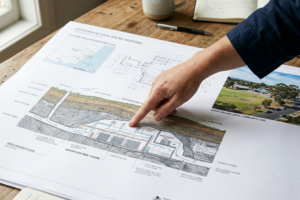
In the submission, she calls for a national audit of the mining voids as a matter of urgency.
“Australia’s advantage in data centre infrastructure is unlikely to come from cheaper capital or better chips than the United States,” she says. “It could come from being the only developed economy with tens of thousands of pre-excavated, thermally stable sites.”
A mining company already holds the void, the site access, the power infrastructure, the water management systems, the ventilation engineering and the underground safety systems, as well as a workforce accustomed to operating in them.
“Every one of these is a prerequisite for an underground data centre, and a barrier to entry for a conventional developer,” Ms Ucukalo says.
“If mining land and infrastructure are repurposed for data centres, the community benefit, connectivity and integrity conditions proposed in this submission should attach to those projects in the same way as any other.”
Learning from the world
Australia will not be breaking new ground. There are data centre innovators around the world. Norway’s Lefdal is just one example of a former mine site repurposed as an underground storage facility.
Iron Mountain lies 67 metres below the surface in a former limestone mine less than an hour north of Pittsburgh in the United States. Spread over 30,000sqm, the western Pennsylvania centre uses an innovative geothermal cooling system, which draws on a huge underground reservoir.
Wangdu Zuo, Professor of Architectural Engineering at PennState Institute of Energy and Environment, says the stable and naturally cool subterranean environment (about 11C) and underground lake at Iron Mountain reduces reliance on conventional cooling.
With data centres forecast to use up to 12 percent of America’s electricity consumption by 2028 and cooling accounting for about 40 percent of total electricity use at individual centres, sustainability is a big concern. In Australia, the Australian Energy Market Operator (AEMO) estimates data centres will consume as much power as every home in Victoria and NSW by 2036.
“Every bit of electricity that a data centre consumes is converted into heat that must be removed and released into the environment,” Professor Zuo says. “Cooling systems, including chillers and cooling towers, are mission-critical infrastructure.”
Forty-five metres beneath Kansas City, Missouri, a former limestone mine has been transformed into the world's largest underground business complex. The SubTropolis Technology Center is a more recent addition to an operation that has been underground for more than 50 years.
“Because of the natural and onsite security and the predictable temperatures, this is the perfect location for data centres,” says Mike Bell, the vice president of owners Hunt MidWest. “A few years ago, tornadoes touched down in the metro. It was pretty severe weather, yet we had no idea it was happening. It’s the same every day here.”
Making the move
Miners are also finding ways to accommodate data centres within existing operations, too.The data centre at Trentino DataMine opened in Italy in June, becoming Europe’s first built inside an active mine.
Located 100 metres underground in the picturesque Non Valley, in the country's north east, the €50 million centre is the result of a public-private partnership. The dolomite rock maintains a constant temperature of 12C without the need for mechanical cooling, while renewable energy is locally sourced.
It is one of the growing number of underground data centres in Europe, due to a combination of reduced environmental impact and increased security benefits.
Rehabilitating mines is costly but can reap dividends not only for the companies behind the clean-up, but also the broader community. Australia already repurposes mining voids. The Kidston Pumped Storage Hydro Project, in far north Queensland, converts a disused gold mine into 250MW of long-duration storage, while Green Gravity is developing gravitational energy storage in disused mine shafts.
“The engineering, regulatory and commercial pathway for turning an Australian mine void into energy infrastructure has been proven,” Ms Ucukalo says. “What has not yet been done is to turn one into a data centre. Our submission is that this is not only viable but essential for the future of Australia.”
The submission proposes a national framework that treats underground construction as the default for data centres. While it prioritises Australia’s 80,000 disused mine voids, it acknowledges that not all centres will be suitably housed in rural or regional areas. But they should all be underground, unless there is a specific reason for them to be above-ground.
“Surface land should be reserved for services that need daylight, street frontage, people and community access” Ms Ucukalo says. “A data centre needs none of these and, in fact, is more efficient and environmentally sound underground. Look at the evidence and act before there are too many of these power-hungry eyesores above ground.”
Look below the surface
Australia has 80,000+ disused mines and a growing data centre boom. Could we put them to better use? Read the evidence and have your say.