Boarding call for flight delay compensation
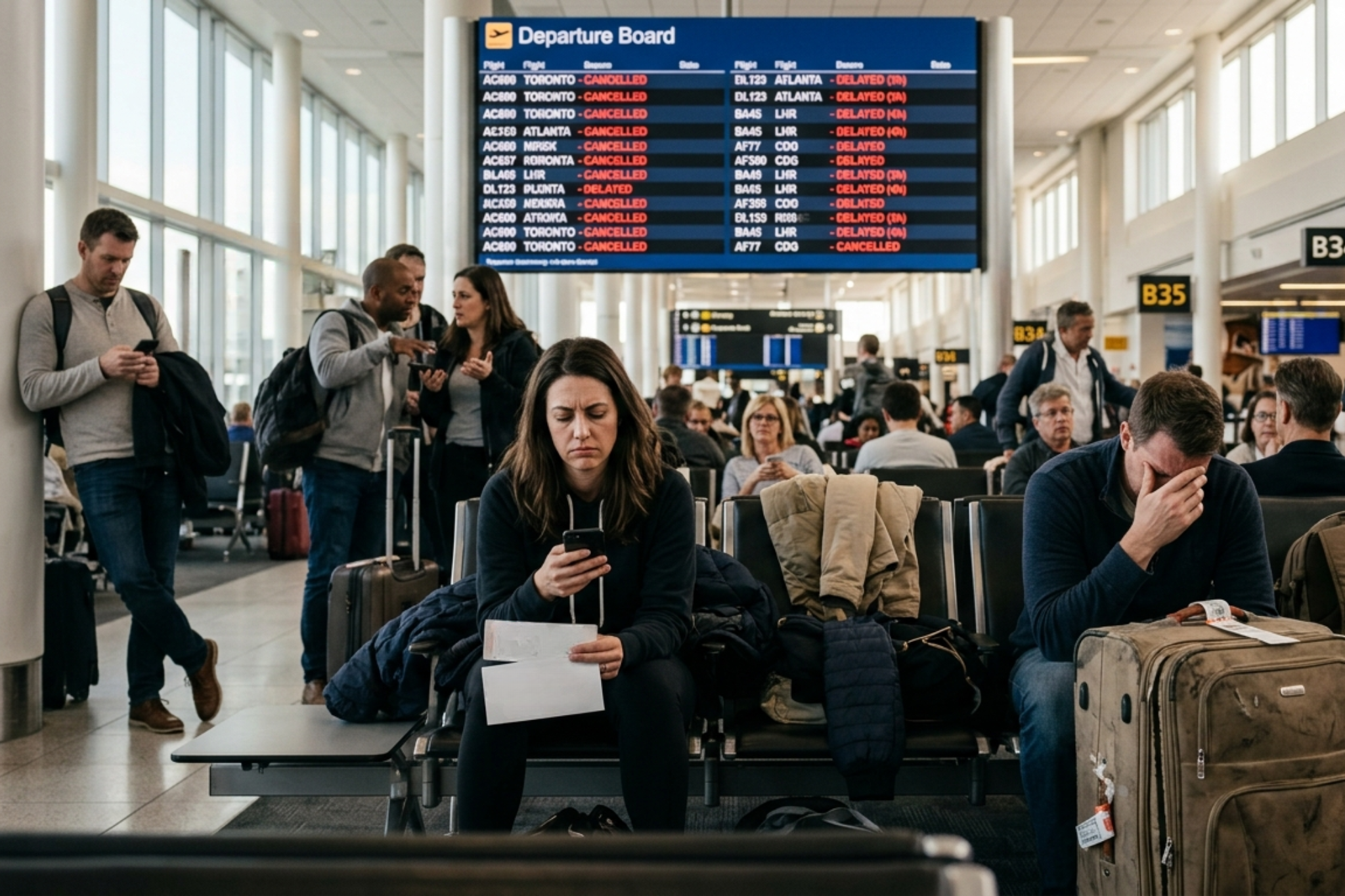
Ask a handful of travellers who experienced flight delays on separate airlines what compensation they received and you are likely to hear five different stories.
Australia has no national minimum standard for flight delays and cancellations, with those affected left to navigate an often confusing mix of airline policies and Australian Consumer Law to determine if they can seek flight refunds, or any other redress.
The most recent report from the Airline Customer Advocate (ACA), which is funded by participating airlines, said that refund requests made up 38 percent of complaints, closely followed by flight delays and cancellations at 35 percent. Virgin attracted the most complaints, while Qantas took the longest to resolve them.
Frustrated travellers are often told the delays are outside the airline’s control. Some may be offered meals and accommodation, others assistance to rebook. But if you have experienced significant delays that have caused undue stress and cost you time and money, such responses will hardly be satisfactory.
Recent legal action has also highlighted the scale of the issue. Qantas agreed to pay $105 million to settle a class action over cancelled COVID flights and issuing vouchers instead of refunds. This demonstrates how widespread airline refund disputes can become.
What is the flight time loophole?
One of the biggest sources of frustration for travellers seeking redress is the airline schedule or flight time loophole.
The Australian Competition and Consumer Commission (ACCC) points out that airlines do not include a guarantee of flight times. “Consumers should not assume that a plane will meet its exact advertised schedule. However, airlines must meet the consumer guarantee of providing a service within a reasonable time".
It is these last few words that cause a lot of headache. What is ‘a reasonable time’? As the ACCC states: “There is no one set definition of what will be ‘reasonable time’. The ACCC doesn’t decide what is reasonable. That is the role of a court or tribunal. Many different factors may be relevant in each individual case".
A short delay of, say, 20 or 30 minutes might be considered reasonable. But if your flight is delayed several hours and causes you to miss a connecting flight, medical appointment or another important event, you might think there is nothing reasonable about it.
Travellers affected by such disruptions would, in theory, be justified in seeking flight delay compensation. In practice, however, the airline could still argue that the new departure was within a reasonable time or was due to factors outside its control. This makes it harder to get a flight refund or other compensation.
So while the ACL does afford Australians some protection, it is not always easy to come by.
Why is Australia introducing new aviation consumer protections?
Australia is lagging when it comes to protecting passengers. The European Union, the United Kingdom and Canada all have clearer, enforceable rules that require airlines to provide assistance, refunds or compensation when flights are disrupted.
The lack of national standards means airlines largely decide what help they will offer, passengers are forced to pursue their rights individually, and the outcomes vary according to the airline, fare and type of disruption. This all came to a head as flight travel recommenced after the pandemic and flight cancellations and delays, as well as complaints about poor customer service, were historically high.
This imbalance prompted the Australian Government to propose new aviation consumer protections, which it claims will clarify airline obligations and the minimum level of assistance required when a scheduled flight is disrupted.
The changes would also include a new independent ombudsman to replace the industry-funded ACA to help consumers with complaints that have not been resolved directly with airlines.
Key proposals include:
-
- Prompt rebooking or refunds when flights are disrupted
- Access to meals, accommodation and transport during long delays
- Clear communication requirements, including timely updates
- Stronger protection around lost luggage
For cancelled flights, the draft charter states travellers should receive a full refund within 14 days, using the original payment, and travellers should only be given a flight voucher if they actively ask for one.
For delays longer than three hours caused by issues within the airline’s control, passengers would be entitled to assistance, rebooking or the option to cancel with a refund if the flight was time dependant.

Do the airline consumer protections go far enough?
When the government invited the public and industry to give their input, consumer watchdog CHOICE welcomed the proposals as a major step forward but said they didn’t go far enough.
“Compensation schemes in Europe have encouraged airlines to reduce avoidable delays and provide consumers with simple cash payments when flights are cancelled or late. This is something Australians also deserve”, CHOICE director of campaigns Rosie Thomas said.
They also felt the proposed ombudsman, or Aviation Consumer Protection Authority, did not go far enough. “We’re concerned the proposed aviation complaints body falls short compared with strong, independent ombudsman schemes in other concentrated markets”, Ms Thomas said. “Banks and telecommunications companies have to answer to an independent umpire and the airlines should too”.
The airline industry, on the other hand, says the proposed framework goes too far and will make it even harder for travellers.
“What we’ve got is an unworkable, complex and prescriptive set of regulations, with this entirely new agency to be created, effectively duplicating the role of the ACCC”, said Graeme Samuel, the chairman of airline industry group A4ANZ.
Mr Samuel, a former head of the ACCC, said the framework was confusing because it overlapped existing consumer law, and the proposed new regulator could force up ticket prices because it would be funded by the aviation industry.
“Don’t think that you’re imposing costs on the airlines”, he said. “These are costs on the passengers because that’s how it happens”.
Why do we need reforms in flight delay compensation?
Many Australians only realise just how weak our protections are when they experience a frustrating delay or cancellation.
If your flight is delayed overnight, you might receive hotel accommodation from one airline, while someone travelling with another airline who is similarly delayed might be told to organise their own room and claim later. Other travellers might be offered flight credits that expire before they can use them, when they would prefer a cash refund.
The Government says the proposed reforms would remove the uncertainty for Australians by clearly spelling out what counts as an unreasonable delay, when refunds are required and what assistance should be provided immediately.
Consultation was completed in October 2025 and legislation is expected to be introduced this year, though no specific timeline has been given.
Until new flight delay compensation rules come into effect, it is important to understand your rights as they stand, and pursue flight delay compensation through the ACA or the ACCC.
Take control with Handle My Complaint
Don’t let airlines dismiss your concern about unacceptable flight delays. And don't waste valuable time googling “are you entitled to a full refund if your flight is delayed” or “can you get flight compensation in Australia”. Instead, make a complaint with us. Handle My Complaint can help you escalate the issue, clarify your rights and pursue a fair outcome.