
How to cut back on household costs
Do you have a handle on your household costs? Feel like money is going out the door faster than it comes in?
There is little comfort in knowing that almost everyone is feeling the same. According to the Australian Bureau of Statistics, all household types recorded rises in living costs in the June 2025 quarter – from pensioners and self-funded retirees to employees and government payment recipients.
The ABS attributed the rise across the board in the cost of housing, which includes rents, utilities and other housing expenses such as rates and repairs, to increases in the cost of electricity – one of the main household expenses.
Electricity prices rose 13 percent in July as state subsidies wound up, with RBA Governor Michele Bullock warning of more pain to come.
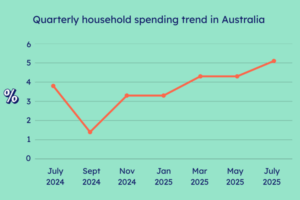
Unsurprisingly, the monthly household spending indicator for July 2025 was also higher, up 5.1 percent on the previous year. The largest increases were in health, transport and miscellaneous goods and services.
Rather than despair about these figures, however, there are steps you can take to reduce household costs.
Examine your spending
The first is to take a closer look at your spending habits. To save money, you need to find out where it is going – and why.
Go through the last few monthly bank statements (savings and credit accounts) and highlight the essentials and the desirables. What does it really cost to run your house? What can you live without if need be?
Use a household costs calculator, also known as a living expenses calculator – there are plenty on the internet – to key in all your monthly expenses. Ensure you include fixed costs such as mortgage or rent and insurance, as well as variables such as groceries, entertainment and clothing. And don’t forget any bills paid annually, such as council rates.
Determine what you can really afford based on the money coming in and create a budget planner to map out household costs. Review it each month – perhaps you have had unexpected expenses such as house or car repairs – and adjust as need be.
Compare and save
How long have you had your home and contents insurance with the same insurer? When was the last time you reassessed your private health insurance? Do you need all those extras? What about the insurance for your pets?
Insurance is a big household expense and one area where big savings could be made. Take the time to do some research and compare your policies with others in the market.
Choice magazine found that, depending on your health insurance policy, you could save up to $1870 a year by switching to a competitor, with the same amount of cover.
If you have life insurance or funeral insurance, assess their pros and cons to determine if you need either. We all want to protect our loved ones from financial stress when they are grieving, but the policy you have been paying for each month may not be right for you or your circumstances.

The same goes for other expenses that we often set and forget. The quickest way to save on your phone bill, for example, is to compare your monthly charge with other providers. If you aren’t locked into a plan, you can easily switch and keep your phone number. Even if you are on a plan, it is worth asking what the penalty might be if you cancel the contract – it might still save you more in the long run.
Take back some power
With the cost of electricity rising, it may be past time to switch energy providers, too. Check the Australian Government’s Energy Made Easy tool to compare energy companies and see if you can get a better deal. This is not available in some states, so check your local area.
Even if you are unable to switch companies, there are many simple ways to cut your power bills, including:
-
- Buy energy efficient appliances. It may cost more to buy a dryer or washing machine with more stars (meaning they use less energy) but it will save you in the long run.
- Switch off the TV, computer and other appliances at the power point instead of leaving on standby. You could cut up to 10 percent off your power bill.
- Get heaters and air conditioners serviced. Replace filters so that they don’t have to work as hard (that is, use more energy).
- Keep the thermostat between 18 and 20 degrees during winter, and between 24 and 26 degrees in summer. Every degree above that will increase your power bill.
- Only cool or heat rooms you are using. Close blinds to keep the heat out in summer.
- Hang your clothes on the line in the sun rather than using the dryer.
Shop smarter

With the weekly grocery shop ballooning – food was another of the leading contributors to the rise in living costs in the June quarter – it pays to get smarter about how you shop.
Here are some simple tips to cut your grocery bill:
-
- Look in your fridge and pantry and build meals around what you already have.
- Choose recipes that are economical, easy to prepare and packed with nutrition.
- Make a list for the week ahead and stick to it at the supermarket.
- Snap up specials but remember that not all specials are special.
- Check the unit price (the price per 100g) and compare with other products.
- Buy items such as flour, rice and pasta in bulk when they are on special.
- If an item you are buying is on special, consider making double the amount so you have leftovers for lunches or to pop in the freezer for another day.
Trim the fat from household costs
When examining spending habits, it’s easy to focus on the big-ticket items, such as rent, electricity and food costs. But don’t forget the little things.
It could be a subscription to an online publication you never read, a gym membership you barely use, or a streaming service you haven’t looked at for months.

We all want to enjoy life, not just get through it, so don’t ditch things you love if you can still afford them. Just take a critical eye at those bank statements and ask yourself some simple questions about all those little extras:
-
- When was the last time I used this?
- Do I really need it?
- Will I miss it if I cancel?
Culling nice-to-have but hardly-used services can save you a lot of money over a year.
How we can help
Sadly, we cannot stop those household bills from coming in. But if you receive one that doesn’t add up – an electricity bill that is through the roof, for example – or have difficulty cancelling a policy or other service, get in touch with us.
Before a headache develops into a full-blown migraine, make a complaint and we will help you handle it.