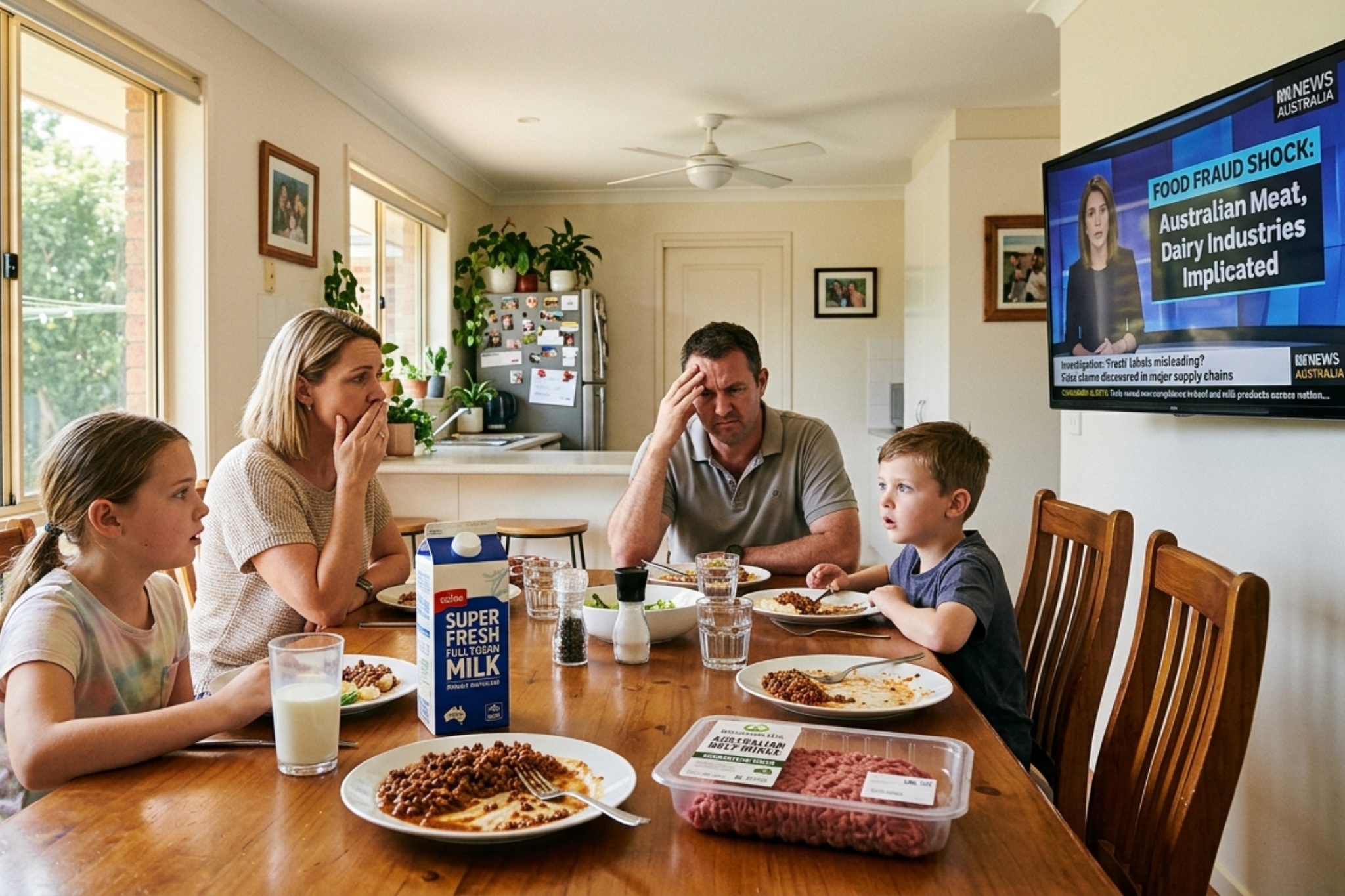
Unsafe food: Do you know what you’re eating?
Mince with all manner of unsavoury "extras". Milk sold as fresh that contained powdered ingredients. Vodka that tested positive for an ingredient found in paint stripper. ABC investigations have revealed the extent of unsafe or mislabelled food we could be eating – and it might kill your appetite.
Australia has food safety standards and an enforcement system through state and territory authorities, as well as the Australian Competition and Consumer Commission (ACCC).
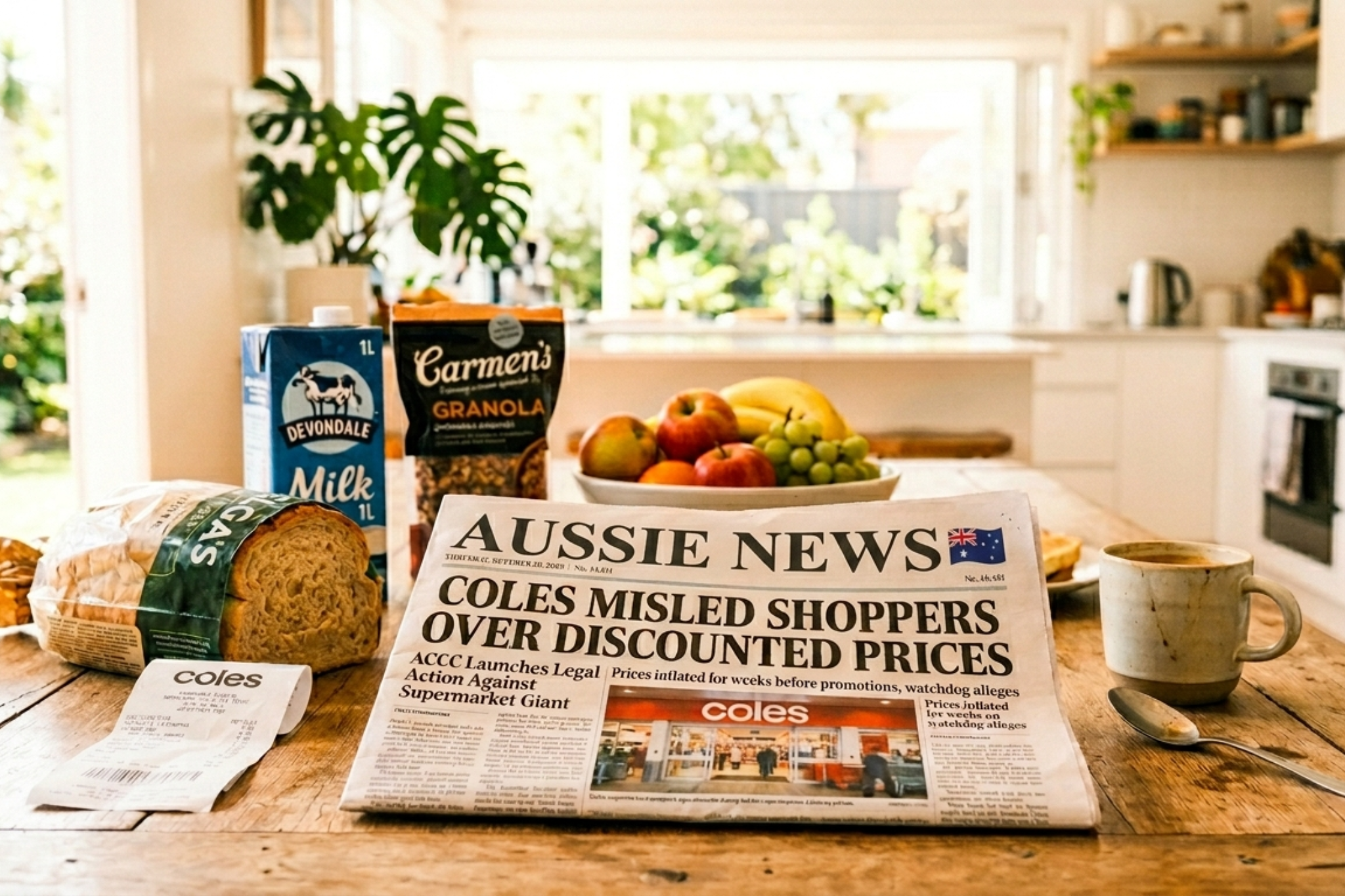
On 7 August, the ACCC confirmed it had begun inquiries into claims of misleading food labelling and packaging raised by the Four Corners investigation. Commissioner Luke Woodward said consumers must be confident that any claims made on food labelling, packaging and in advertisements were “truthful, accurate and not misleading”.
However, breaches are often only caught after someone has complained or a product that is already on the shelves has been tested. This is alarming for consumers who expect their food to be safe and contain what it says on the packaging.
Asked why the ACCC had not been acting on food mislabelling already, Dr Leigh said the commission “responds to inquiries that are put in”.
In July, Lactalis, the company behind Golden North “Country Fresh” and Ferguson Valley “WA Dairy Fresh Milk” was fined $59,400 after regulators found its “fresh milk” contained substantial amounts of reconstituted, powdered ingredients.
The question now is not whether the ACCC can act, but how hard.

What makes food unsafe
Chemical or biological contamination is very dangerous for consumers. ABC’s 7.30 sent a $59 bottle of Dirty George vodka, bought from an IGA in Melbourne, for independent testing. It contained tert-butyl alcohol – an ingredient found in industrial cleaners like paint stripper – at roughly 500mg/l, along with glycerin that could be used to mask the taste.
Michala Kowalski from the National Drug and Alcohol Research Centre told the ABC it was the kind of ingredient you might find in perfume or hand sanitiser. “You do not want to be drinking tert-butyl ... it’s a petrochemical,” she said, adding that the glycerine could also cause issues, such as ongoing diarrhoea or nausea.
Broader testing has turned up methanol and plastic residues in other bottles sold through ordinary retail outlets.
Another potentially dangerous ingredient is an undeclared allergen, which can prove fatal for people with severe allergies such as nut or dairy. In 2017, Celia Mars, a mother with a severe milk allergy, died after eating a wrap dressed with “a dairy-free" coconut yoghurt. She read the label and trusted it, but the yoghurt contained milk protein. While this tragedy happened in England, Queensland-based COYO had licensed Planet Coconut to manufacture and sell its product in the UK and Ireland. Planet Coconut sued COYO, which in turn sued manufacturing company Tate & Lyle, the producer of the yoghurt stabiliser they claimed contained the dairy contaminant. Legal action is ongoing.
Serious food safety breaches
Then there is substitution or adulteration, where ingredients are swapped for something inferior, and often not fit for human consumption. Greens politician Abigail Boyd has read restricted NSW Food Authority files that she says show consumers may have unknowingly eaten food with mouse fur or metal shavings, and that mince sold as beef or lamb may have contained horse meat. She is pushing for the public release of all the files.
This information was included in an ABC Four Corners examination of the integrity of Australian food. The eight-month investigation looked at import inspection records, national food recalls, state regulator records and international food fraud intelligence.
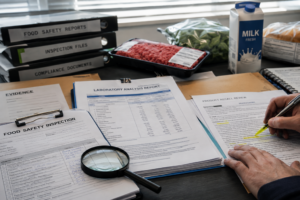
Four Corners also commissioned independent testing of hundreds of products bought from Coles, Woolworths and Aldi in four states, as well as independent retailers across Australia. They found many adulterated items that will turn your stomach, including:
-
- Turmeric containing lead chromate, a pigment used in paints and plastics and not permitted in food in Australia, and high levels of iron oxide, a crushed-up rock that can add colour and weight.
- White rum that contained 9.4 times the legal limit of methanol, and whisky that contained 8.9 times the legal limit. The side-effects of methanol poisoning range from headaches and vomiting to blindness and death.
Moreover, the investigation found that only a fraction of imported food is inspected, with tests for dangerous contaminants falling over the past six years. Honey is the only import routinely tested for contamination, despite everything from arsenic in rice to listeria in cheese being detected at our borders.
Misleading labels are also common
Not every problem with the contents of food and drink we buy is a health risk. Some of it comes down to the labelling and that you are not getting what you paid for.
Country-of-origin claims are a common issue. Independent testing of 221 processed tomato products from 39 brands found about 22 percent did not live up to what they said on the packaging. Products carrying “Australian grown” or “Italian” claims, including well-known supermarket brands, traced back to China, more than half to Xinjiang.
Separate testing of eggs, seafood, spices and spirits found similar gaps. Woolworths home brand eggs labelled cage free came from caged hens, while frozen “Australian” seafood was also found to have likely come from overseas.
Under Australian Consumer Law, country of origin claims have to be true, accurate and based on reasonable grounds but that’s a standard all businesses are expected to meet, not one that is checked before the product reaches the shelf.
Words such as natural, organic and dairy free carry real weight with shoppers, too, but food industry insiders told Four Corners that labelling routinely makes ultra-processed foods look healthier than they are, including products aimed at babies.
What is a food fraud fine actually worth?
Where the regulator takes a company to court over false or misleading representations, the maximum penalty for a corporation is the greater of $100 million, three times the value of the benefit obtained, or 30 per cent of the company’s adjusted turnover during the period of the breach.
So the question the Four Corners findings raise is not whether penalties exist. It is which end of that range they land on. If reconstituted powder in a bottle labelled “fresh milk” is worth $59,400, what is turmeric bulked out with lead chromate worth? Or white rum at 9.4 times the legal methanol limit? Or supermarket eggs sold as cage free that came from caged hens?
Common food complaints
The recent headlines back up what Handle My Complaint has been hearing from consumers for some time, with shoppers complaining about everything from paying a premium for local produce that is anything but; eggs that didn’t weigh what they said on the carton; meat that has either been rancid or made them sick after it was cooked; and foreign objects, such as plastic or bark, in their food.
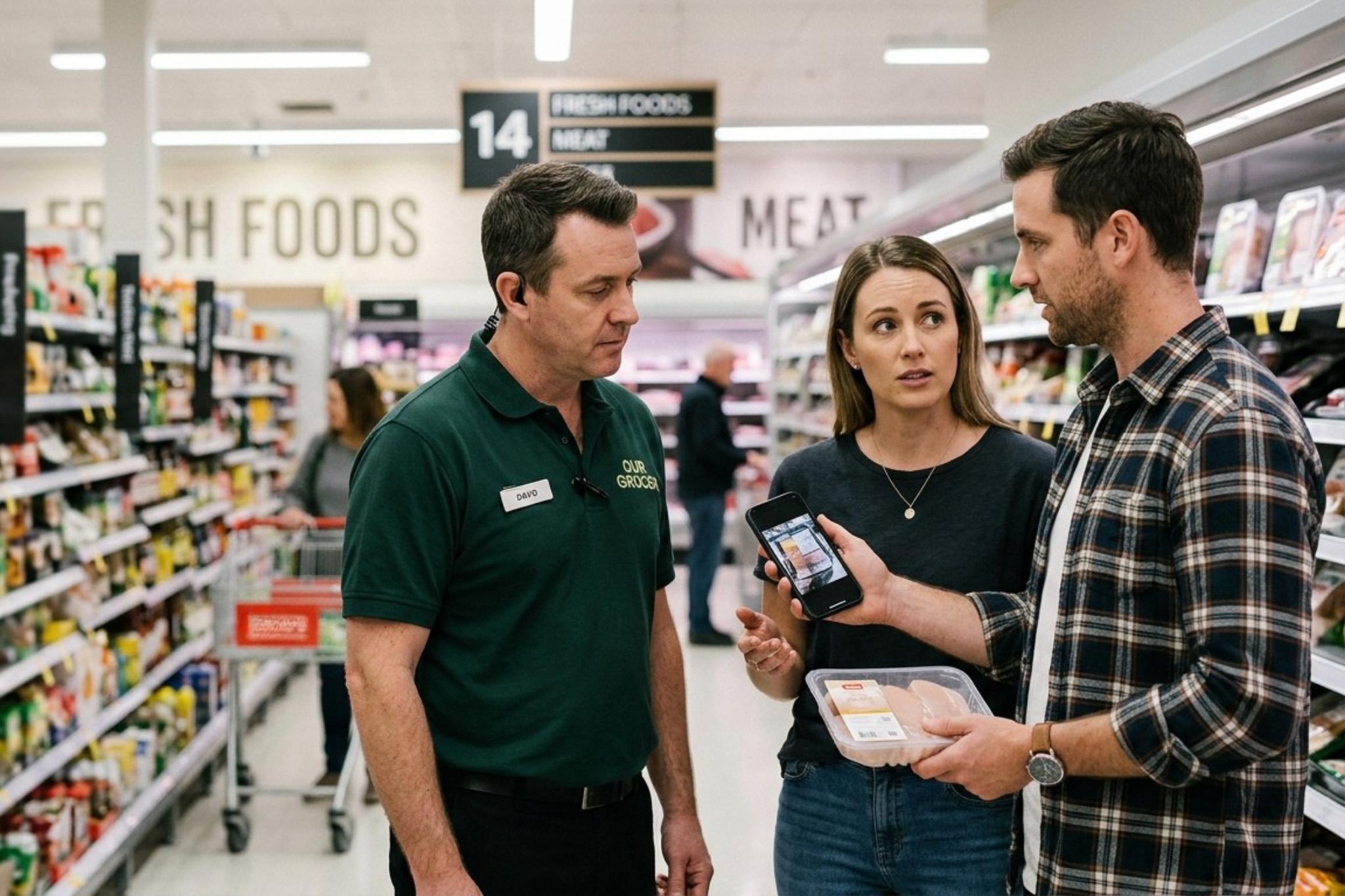
They also say when they do raise the issue at the supermarket, the way staff respond only compounds the problem, with poor customer service a real bug bear. It is always worth speaking up, however, for our health and our hip pockets.
It is estimated that foodborne illness alone costs the Australian economy about $3 billion a year, up from $2.8 billion in 2023, with a quarter of the country’s gastroenteritis cases linked to contaminated food.
While unsafe food is a huge concern, the Four Corners investigation reiterates that food fraud goes well beyond food safety. When we aren’t getting what we paid for we should all be asking about testing gaps that let unsafe and wrongly labelled products on our shelves. With the ACCC now making inquiries, the next question is what it does with what it finds.
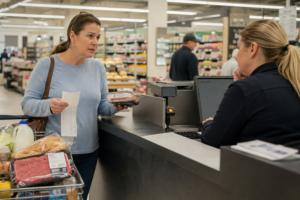
What can consumers do about food fraud?
We may not be able to run lab tests in the supermarket aisles for unsafe food, but there are a few habits worth forming to help reduce the risk of being ripped off or falling ill.
-
- Check labels for specifics. “Made in Australia from local and imported ingredients” is a different claim to “Product of Australia”. Also look for percentages to see how much of the listed ingredients are made in Australia.
- Weigh up price and premium claims. If “Australian grown” tomato paste, for example, costs the same as home-brand imported paste, it might be worth a closer look.
- Keep the packaging. If something tastes wrong, looks wrong, or makes you unwell, don’t just bin it. Photograph it or take it back to the retailer. Batch numbers and use-by dates help regulators trace a problem back to its source.
- Report it. A single complaint might not go anywhere, but if enough people complain about the same issue, a pattern builds. Even if the retailer does the right thing and refunds your money, it can help trigger a recall or broader investigation.
- Escalate if needed. Speaking up doesn’t just help you – it's often the only way a bigger problem is noticed at all.
It’s also important to know your rights as a consumer and how to make a complaint about unsafe food that actually goes somewhere. No one should be eating dodgy or dangerous food.
Food fraud? Don’t swallow it
If you have bought what you believe is unsafe or mislabelled food, make a complaint with us. We will help you report the issue and keep pushing for stronger food safety regulations for the safety of all Australians.